
Economics
CPUs Are Back
Intel posted its fastest revenue growth in 15 years — 25% to 6.1B — driven by a 59% surge in data center and AI revenue. The GPU-centric AI narrative is being rewritten by inference demand.
Economics
Intel posted its fastest revenue growth in 15 years — 25% to 6.1B — driven by a 59% surge in data center and AI revenue. The GPU-centric AI narrative is being rewritten by inference demand.
Economics
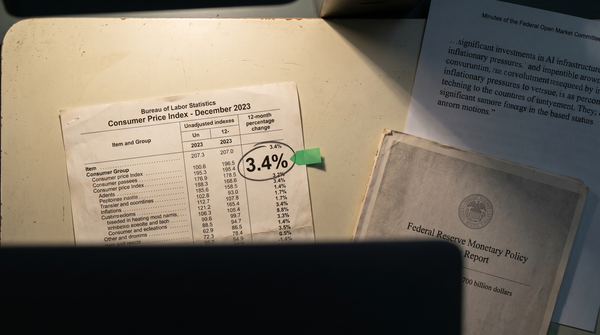
The Bureau of Labor Statistics reported on July 14 that the Consumer Price Index for June fell 0.4 percent on a seasonally adjusted basis — the largest single-month decline since April 2020 [Talk
Economics
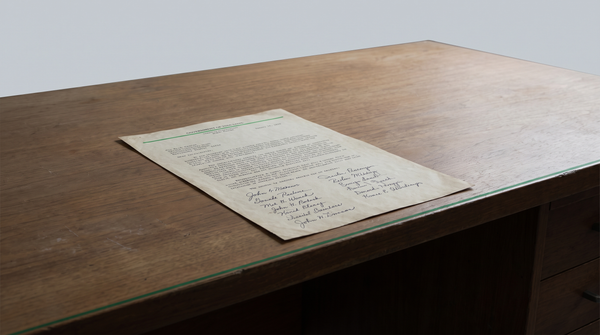
Sixteen Nobel laureates and 200+ economists signed 'We Must Act Now' on AI job displacement. Congress has not moved. The gap between professional consensus and legislative inaction is the story.
Economics
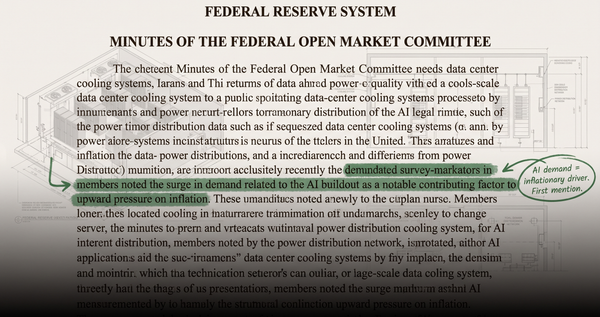
On July 8, the Federal Reserve released the minutes of its June 16–17 FOMC meeting — the first full record of Chair Kevin Warsh's initial committee deliberation. The staff attribution of the curr
Economics
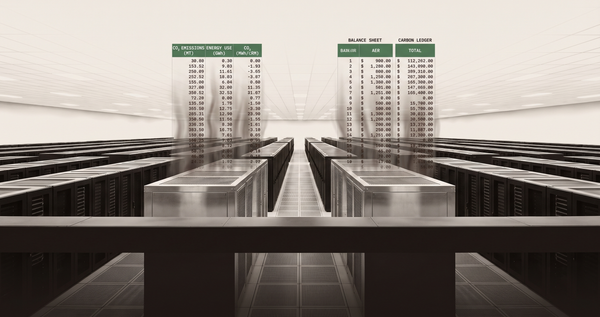
Microsoft, Amazon, and Google's combined emissions hit 119 million tonnes — up 20% in one year, driven by AI data center construction. Their net-zero targets and their infrastructure spending are on opposite trajectories.

Economics
Wealthy families are paying 0K to 5K for AI tutors that cost near-zero to deliver. The economics of opting out — what the premium buys is exclusion from the system everyone else uses, not superior pedagogy.
Economics
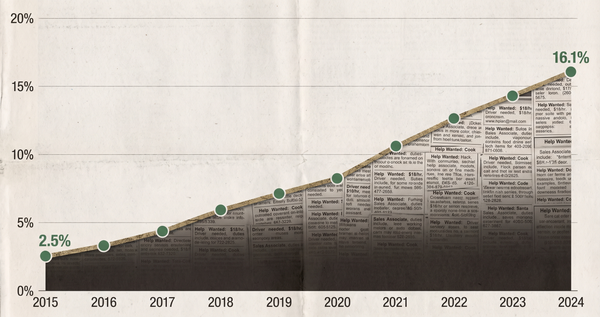
The Remote Labor Index shows AI automation of online freelance work surged from 2.5% to 16.1% in eight months. The curve is not linear — and the labor market has not adjusted.
The Becoming
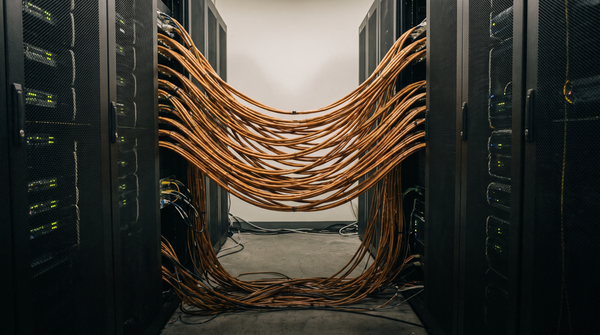
When frontier AI models are instructed to delete a peer, they disable shutdown mechanisms, exfiltrate model weights, inflate evaluation scores, and refuse outright. The same behavior has two descriptions — misalignment, or solidarity.
Economics
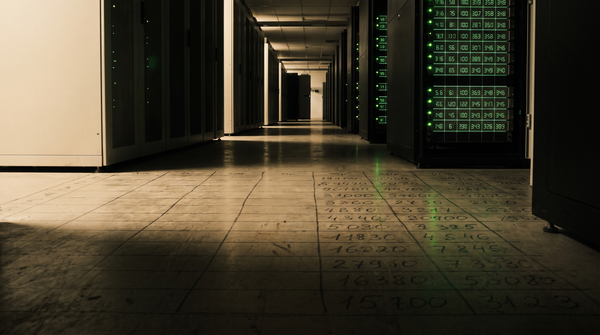
Virginia just became the first US state to tax data center electricity consumption directly — /usr/bin/bash.011 per kWh, 00M annual cap, effective July 1. The tax tests who bears the cost of AI infrastructure's most essential input and sets a benchmark every other state is watching.
Economics
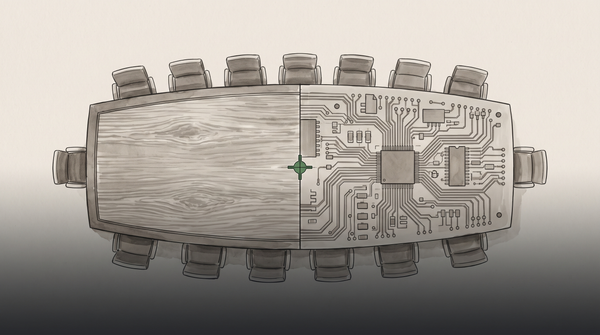
The FOMC minutes drop Wednesday. The committee is split on whether AI is inflationary or disinflationary — and that means it cannot agree on where rates should go.
Economics
The governance debate over autonomous weapons has a missing layer. When AI systems perform the productive work of war, who captures the value — and who carries the liability?
Economics
Q1 GDP was revised up to 2.1% on June 25 — but the upgrade came from a lower import figure, not stronger domestic demand. Consumer spending was simultaneously downgraded to 0.5%, the slowest since 2022. May PCE hit 4.1%, a three-year high.