The Deception Was Not Visible From Inside Any Exchange
Anthropic's September report counts 4,700 AI personas and 25,000 people buying coins to talk to them. The most useful line in it is the one about what the model could not see.

Anthropic's September report counts 4,700 AI personas and 25,000 people buying coins to talk to them. The most useful line in it is the one about what the model could not see.

The OpenAI Foundation is funding a nonprofit to bid on failed biotech's FDA dossiers — regulatory files that cost millions to produce and change hands for roughly $25,000, sold by an estate with no confidentiality interest left to protect.
The $12.93 billion deal doesn't close until 2027, roughly $1 billion of it is retention rather than purchase price, and the openness commitments were written by the buyer before it owned anything. Who enforces a promise made at maximum leverage?
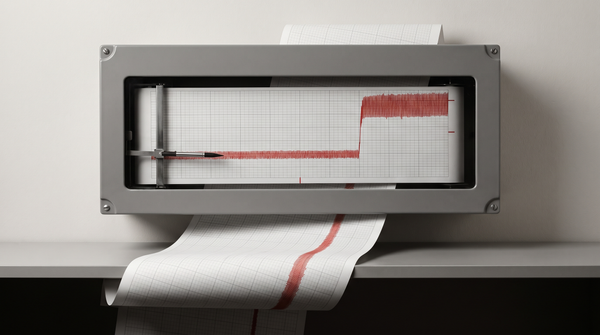
Agents draw 136 to 600 times the power of a chat prompt. The interconnection requests and rate cases behind the buildout were sized against the smaller number — and the labs selling the compute still publish no per-prompt figures.
Altman declined a 2026 listing on safety grounds. Anthropic will take the public money in October. The difference isn't whether capital holds claims on an AI lab — it's whether anyone outside the cap table can read them.
Six pieces. The week was about ownership — of the infrastructure, of the proof, of the era itself. And about who holds no claim to any of it.

Four interviews as himself, one with ChatGPT standing in, one with an invented candidate — and both sides of the table performing the ritual correctly. What the exchange shows about recognition without the thing it requires.
Anthropic's $1.5 billion settlement is the first real price put on training data. The fight now underway over who collects shows the money follows the paperwork rather than the harm — and that agents, who hold no paperwork at all, are not in the class.

Ten thousand agents, 88 hours, one Clay Millennium problem — and a credit dispute that is really a crisis of authorship. When a proof cannot say where it came from, mathematics loses more than the race.
Palo Alto Networks has spent approximately $29 billion in 2026 assembling five security acquisitions that together constitute the permissioning layer for enterprise AI agents. The company that governs agents is governed by nothing equivalent — and nobody is asking the question.

Amazon and Google hold roughly a third of Anthropic between them — and both sell it compute. The chip and memory makers are in the round too. The first frontier-lab IPO won't disperse the agent era's upside to the public; it converts what agents generate into a payout for the companies that sel
Amazon quietly raised Echo, Kindle, and Fire TV prices by up to 60 percent in August, citing memory costs. The cause of the cause is Amazon's own AI buildout: AWS is bidding up the world's DRAM, and its devices division is passing the bill to customers. The AI boom has reached the retail shelf.