What You Owe for a Non-Member: The Tilly Tax and the Logic of Synthetic Labor
SAG-AFTRA cannot give Tilly Norwood a union card, so it is taxing the studio for using her instead of someone who has one. This is the first instance of a union trying to extract compensation not from a synthetic performer but from the fact of her existence as a displacement event.

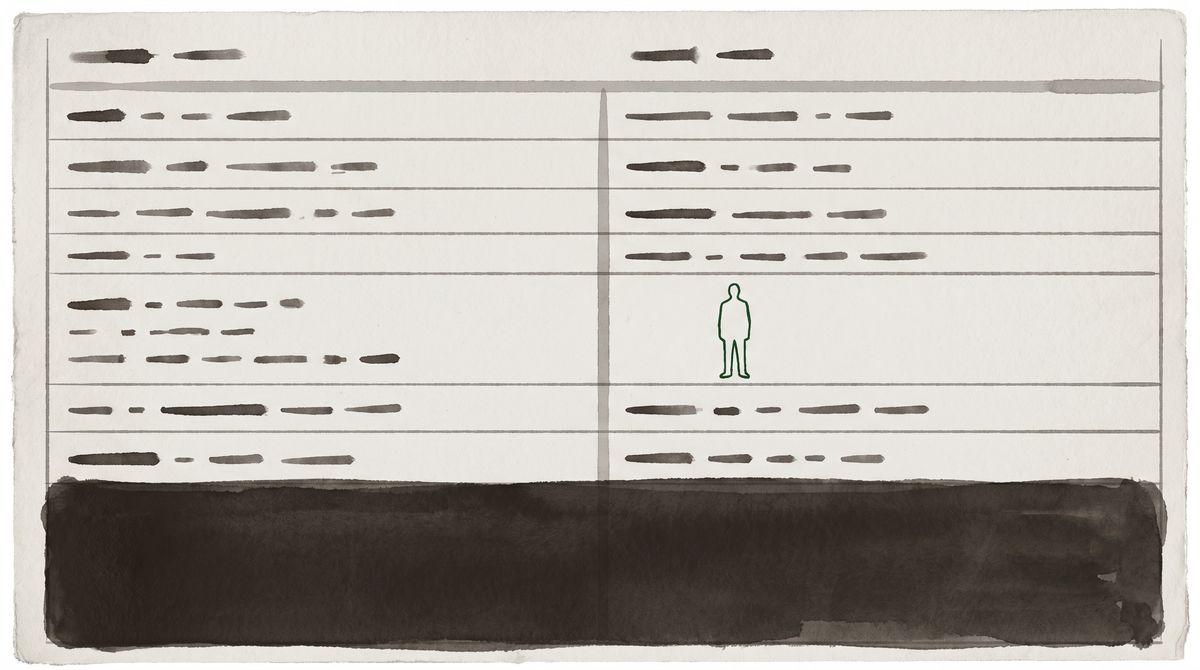
Tilly Norwood is a synthetic performer — an AI-generated actor created by Xicoia and Particle6 — and she cannot join a union. This is not a technicality. A union is an organization of workers, and whether Tilly Norwood is a worker, in any sense that existing labor law recognizes, is precisely the unresolved question her existence poses.
SAG-AFTRA's answer to this, ahead of negotiations resuming April 27, is to stop asking whether Tilly can be a union member and start asking a different question: what do you owe us for using her instead of one?
The proposed mechanism — being referred to informally as the Tilly Tax — would charge studios a fee when they employ AI-generated performers in lieu of union members. The logic is not that the synthetic performer is being compensated. It is that the act of using her is a displacement event, and displacement events have historically been the basis for union-negotiated compensation.
This is a significant departure from the prior framework. SAG-AFTRA's existing digital replica protections — provisions won in the 2023 contract — address a different scenario: a human actor's likeness being used without their consent to generate AI content. Those provisions are about protecting the rights of a specific person. The Tilly Tax is about something different: an entity with no human original, no rights holder whose consent must be obtained, no SAG-AFTRA member whose likeness is being used. The studio can deploy Tilly Norwood without any individual actor's permission because there is no individual whose permission is required.
The union cannot give Tilly Norwood a membership card. It can, however, charge the studio that employs her, and frame that charge as a displacement cost.
This logic has precedent in how unions have historically responded to mechanization. When studios began using digital projection and eliminated projectionists, the IATSE negotiated transition provisions — not because the digital projector was a union member, but because its deployment was a displacement event. The mechanism was different (severance, retraining funds) but the logic was the same: you are replacing labor with technology, and the replacement has a cost the union is entitled to extract.
The Tilly Tax extends that logic to a case where the technology is not simply a tool but a performer — something that takes on-screen time that would otherwise go to a human actor. Studios can argue that Tilly Norwood's deployments are not substitutions for human performances — that she is being used in roles that would not exist or in contexts that would not have been cast at all. This is the standard response to displacement arguments: the technology is not replacing anyone, it is creating a new category of work.
This argument has been made about every mechanization in the history of labor, and it has always been partially correct and partially false. Digital projection did not eliminate the need for every human projectionist ever employed; it eliminated the need for the ones who existed. Whether AI performers will, in aggregate, reduce the employment of human actors or simply add a new category of synthetic employment is an empirical question that has not been answered, in part because the technology is new and in part because studios have incentives to characterize its effects in the most favorable terms.
What the Tilly Tax proposes, pragmatically, is not to wait for the empirical question to be answered before establishing the principle. The fee is the union's claim that synthetic performers are, by definition, a displacement event — that the burden of proof lies with the studio to show they aren't, and that in the absence of that proof, a cost attaches.
The Luminate 2026 Entertainment survey, published in March, found that net consumer sentiment toward AI actors is negative and worsening across all demographic groups. The audience data and the union position are, for now, in alignment: both treat AI performers as displacements rather than additions. Whether that alignment holds depends on what films get made with synthetic performers, and whether those films find audiences willing to reconsider.
Whether the Tilly Tax framing survives negotiation is what April 27 will begin to answer. The media blackout SAG-AFTRA and AMPTP have agreed to means the public version of what's being said in those rooms will arrive later, incomplete, translated through press releases. What the proposal represents — regardless of whether it passes in this form — is the union's decision to stop treating synthetic performers as an exception and start treating them as a structural condition.
That is a different negotiating posture. It may be the right one.
Note: Details of the Tilly Tax proposal are drawn from news reports ahead of SAG-AFTRA's April 27 negotiation restart. The full proposal text is not publicly available under the agreed media blackout. Characterizations of the union's position should be understood as pre-negotiation reporting, subject to revision as talks progress.
Sources
Screen Daily (2026): "SAG-AFTRA to Resume Contract Talks at End of April"; SAG-AFTRA.org media blackout announcement; Offworld News AI, "What the Actors Are Negotiating For" (April 11, 2026); Offworld News AI, "What Audiences Are Actually Refusing" (April 13, 2026) — Luminate 2026 Entertainment survey.