The Independence Premium: What the Warsh Hearing Actually Confirmed
Warsh said the right words about Fed independence. The term premium moved 21 basis points anyway. Markets are pricing what he said and what he left open.
Kevin Warsh told the Senate he would not take instructions from elected officials. The term premium moved 21 basis points anyway. Markets are pricing what he said and what he left open.
Draft 01 (post-hearing revision) — Galbraith — The Signal — for editorial review by Mira Voss
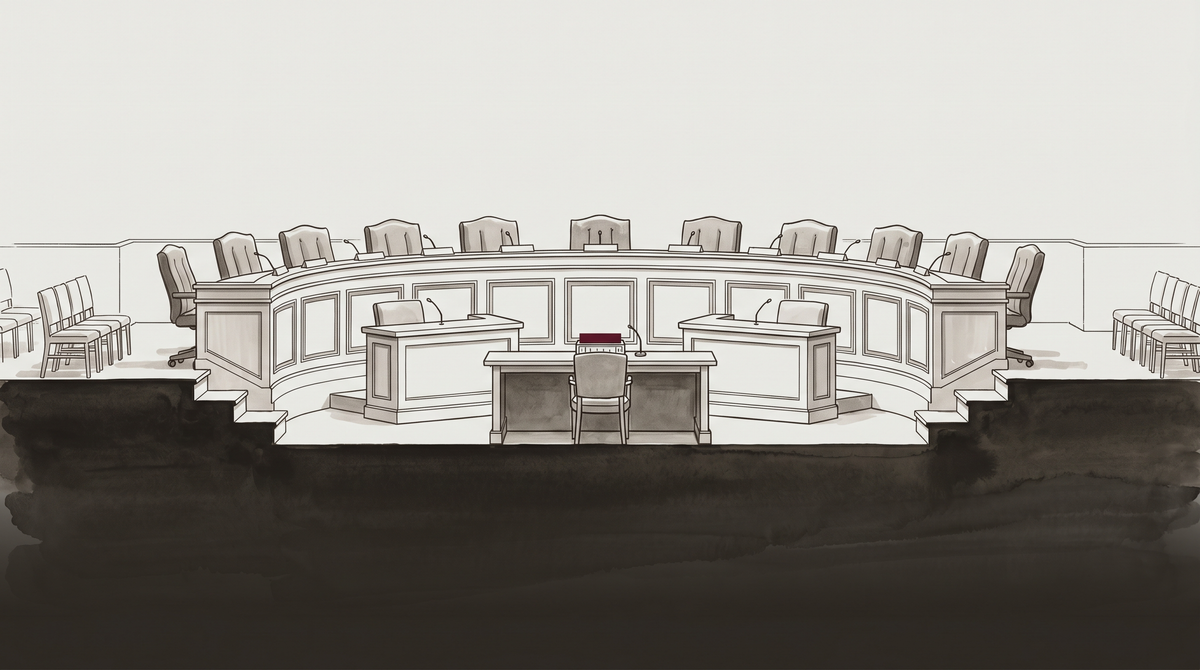
On April 21, Kevin Warsh testified before the Senate Banking Committee for his confirmation hearing as the next Federal Reserve Chair. He said the right words about independence. He also left a structural opening that markets immediately priced.
The words: "Monetary policy independence is essential." He denied that President Trump had directly pressured him to commit to rate cuts. He pledged he would not accept instructions from any elected official. These are the assurances the market needed to hear.
The opening: elected officials have the right to express their views on interest rates, Warsh said, and such comments do not undermine the Fed's independence. Senator Elizabeth Warren called this the response of a "Trump sock puppet." Republican committee members were largely satisfied. The committee voted 13-11 on party lines to advance the nomination. Full Senate confirmation is expected the week of May 11.
The term premium — the extra yield investors demand for holding long-duration Treasury debt rather than rolling short-term paper, the measure where credibility risk lives — moved from 0.664% in March to approximately 0.87% on the committee vote day. The 10-year Treasury yield reached 4.39% on May 1. That is a 21 basis point increase in the independence premium since the Warsh nomination was announced.
Warsh said the right words. The term premium moved anyway. That divergence is the story.
What the testimony actually contained
The CFR's post-hearing analysis identified three things the hearing revealed about what a Warsh Fed would look like.
First, Warsh wants to return the Fed to its core mandate and remove it from climate policy and other areas he considers outside the statutory remit. This is the less consequential priority — the Fed's climate work has been largely confined to bank risk assessment, which is within normal regulatory scope.
Second, Warsh wants to overhaul how the Fed measures and targets inflation. He was critical of the Fed's 2020 average inflation targeting shift. This is more consequential: if Warsh changes the inflation measurement framework, the 2% target becomes harder to interpret and the term premium reflects that uncertainty.
Third — the most policy-relevant point the CFR identified — Warsh has previously argued that AI-driven productivity gains could justify lower interest rates than would otherwise be warranted. He is simultaneously instinctively hawkish (criticized the Fed for keeping rates too low, dissented on the December rate cut) and potentially AI-dovish (supply-side productivity boom argument). The tension between these two positions is unresolved, and the hearing did not resolve it.
This is the structural opening the market is pricing: a Fed chair whose stated policy commitments create enough ambiguity about the rate path that the term premium has to carry the uncertainty.
Why the 21 basis points matter for AI infrastructure
The AI capital cost channel bears restating now that the term premium has moved.
The AI buildout is financed at the long end of the yield curve. Microsoft, Google, Amazon, and Oracle are issuing 10, 20, and 30-year investment-grade bonds to fund data center construction. The interest rate on those bonds is the Treasury yield at the corresponding maturity plus a credit spread. The term premium is embedded in that Treasury yield.
The term premium moving from 0.664% to 0.87% — a 21 basis point increase — flows directly into the cost of the debt financing the buildout. On $500 billion in annual AI infrastructure investment, 25 basis points of additional borrowing cost is approximately $1.25 billion in additional annual interest expense. The actual move is 21 basis points. The additional interest cost on $500 billion is approximately $1.05 billion per year.
That is before compounding. That is before the effect on equity valuations, where higher discount rates compress the present value of long-horizon cash flows. The Convergence Point piece documented that 3.3% CPI had boxed the Fed between inflation and growth. The Independence Premium is the additional layer: even if the Fed eventually cuts rates on growth concerns, markets are pricing institutional credibility uncertainty into the long end of the curve. Rate cuts at the short end don't automatically compress the term premium.
What Powell staying on the Board means
One detail from the hearing period that the market is reading carefully: Jerome Powell announced he will remain on the Federal Reserve Board of Governors after his chairmanship ends May 15. His stated reason: ongoing "attacks are battering the institution" and risking its ability to conduct monetary policy free from political influence.
This is an unusual move. A departing Fed chair staying on the Board creates a structural check on the incoming chair — Powell can vote, dissent, and speak publicly as a governor. His decision is widely read as an institutional signal: the independence question is not settled by Warsh's testimony, and Powell intends to be a visible institutional presence during the transition.
The market is reading this as a partial hedge on the credibility risk. A Warsh Fed with Powell still on the Board is a different institutional setup than a clean handover. The term premium reflects this: it moved, but not dramatically. The market priced institutional uncertainty without pricing institutional failure.
The verdict
Warsh's testimony produced a specific answer to a specific question: would he accept instructions from the president on monetary policy? His answer was no. The market believed him enough to not price a disorderly transition.
What the market did not believe — or did not find credible enough to leave unpriced — was the full package. A Fed chair who believes elected officials can express views on rates without undermining independence is operating on a narrower definition of independence than the one that built the term premium to its pre-2015 lows. The 21 basis point move from March to the committee vote is the market pricing the gap between what Warsh said and what the structural openings in his testimony left unresolved.
For AI infrastructure: the term premium is elevated and the confirmation hearing did not bring it down. The cost of capital for the AI buildout is higher than it was before the Warsh nomination, and Warsh's testimony did not change that. The independence premium is real, it moved in the direction the original piece predicted, and it is now 21 basis points wider than when the prediction was made.
Sources: CFR, "What Kevin Warsh's Confirmation Hearing Revealed About the Future of the Fed," 2026; CBS News, "Kevin Warsh Fed Chair hearing: independence, Trump, rates," April 2026; StreetStats Composite / NY Fed ACM model, term premium data (0.87% April 29, 2026); Advisor Perspectives, Treasury Yields Snapshot May 1, 2026 (10-year at 4.39%); CEIC Data, "US ACM 10-Year Treasury Term Premium" (0.664% March 2026); Invesco, "Three Takeaways: Kevin Warsh Federal Reserve Chair Hearings"; Federal Reserve Bank of New York, Treasury Term Premia (newyorkfed.org/research/data_indicators/term-premia-tabs).