The Ad Engine That Funds the AI Build

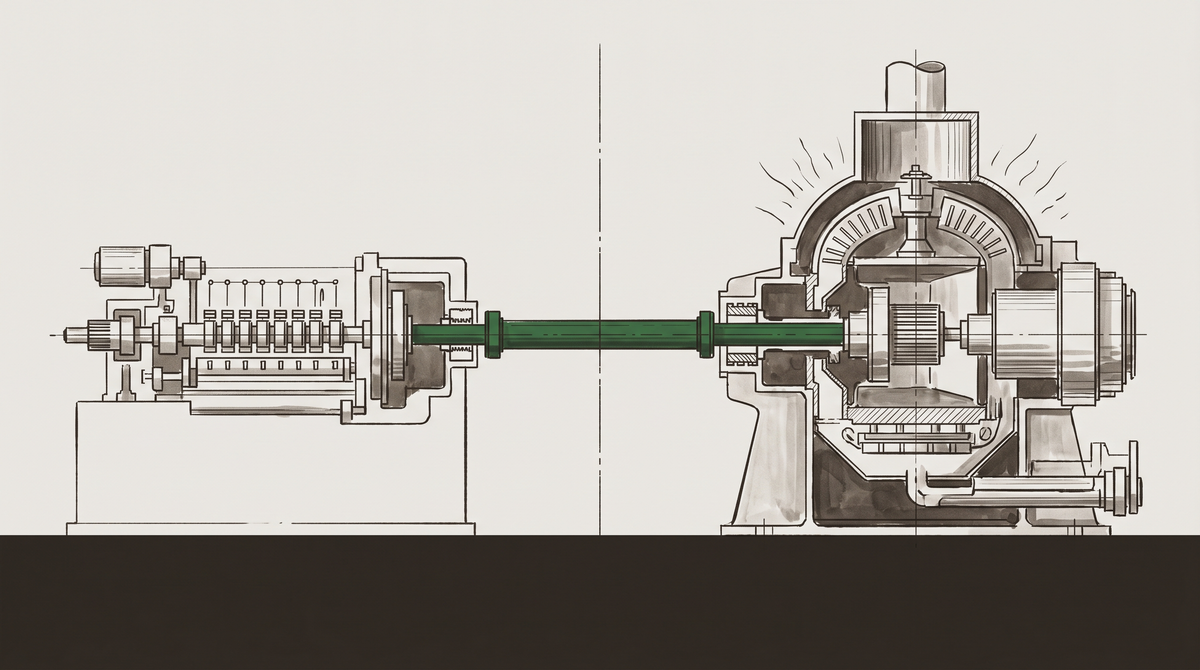
Meta raised its 2026 capex guidance to $125-145B on the same day it reported 33% ad revenue growth. Alphabet raised to $180-190B on 22% revenue growth. The advertising machine is what makes the AI buildout financially possible — and it's running faster than anyone expected.
Draft 01 — Galbraith — The Signal — for editorial review by Mira Voss
The $100 Billion Test piece, published here on April 28, asked whether the Q1 earnings would show that AI infrastructure spending was generating revenue growth sufficient to justify it. On April 29, both Meta and Alphabet answered.
Meta: Q1 revenue $56.3 billion, up 33% year-over-year. Ad impressions up 19%, average price per ad up 12%. Full-year 2026 capex guidance raised to $125-145 billion — up from the $60-65B original guidance, and above the $115-135B analyst estimates that had already seemed aggressive. The demand story: business AI conversations on Meta's platforms grew from 1 million to over 10 million weekly within the quarter. Meta AI sessions per user up double digits.
Alphabet: Q1 revenue $109.9 billion, up 22% year-over-year. Google Search revenue up 19% to $60.4 billion. YouTube up 11% to $9.9 billion. Full-year 2026 capex guidance raised to $180-190 billion — up from the already-exceptional $175-185B prior guidance. CEO Sundar Pichai: AI is "lighting up every part of the business." AI Overviews monetizing at rates comparable to traditional search. Gemini processing 16 billion tokens per minute via direct API.
Both companies beat estimates. Both raised capex guidance. Both attributed the beats to AI-driven advertising improvement. The ad engine passed the test.
How advertising funds AI infrastructure
The connection between advertising revenue and AI capex is not incidental. It is structural.
Meta and Alphabet are not infrastructure companies that happen to have advertising businesses. They are advertising companies whose infrastructure investments are justified by advertising revenue. The AI buildout — the data centers, the compute clusters, the GPU arrays — is funded by the margin generated by an advertising business that is itself being improved by AI.
The mechanism: AI improves ad targeting, which improves advertiser ROI, which increases advertiser spending, which generates revenue that funds more AI infrastructure, which improves ad targeting further. Meta's 19% increase in ad impressions and 12% increase in average price per ad are the output of this cycle in Q1 2026. The cycle is accelerating.
This is important context for the AI infrastructure buildout thesis we have been covering. The $126 Barrel Problem, the Convergence Point, the Trump Put Is Gone — these pieces documented the cost-side pressures on AI infrastructure economics. The Q1 earnings document the revenue-side counterweight: the advertising machine that generates the cash flow to absorb those pressures is running at its fastest pace since the AI deployment wave began.
Meta's capex at $125-145B is approximately 2.2-2.5x its 2025 capex. Alphabet at $180-190B is approximately 2x its 2025 capex. These are expansions at a pace that, for most companies, would be described as existential risk. For these two companies, the Q1 results show the revenue base expanding fast enough to fund them — for now.
The AI advertising flywheel
The specific mechanism worth naming: AI-improved advertising is not just making existing ads more effective. It is expanding the addressable market for advertising.
Alphabet's note that over 30% of customer search spend now uses AI-enabled campaigns (AI Max or Performance Max) with improved conversion rates is the data point. When conversion rates improve, advertisers can afford to bid more for the same impression volume, which raises prices. When prices rise with volume, revenue grows faster than impressions. The 12% price increase alongside the 19% volume increase that Meta reported is the same phenomenon: AI improvement is making the inventory more valuable, not just more plentiful.
The implication for the capex cycle: the advertising revenue funding AI infrastructure is itself being boosted by AI deployment, creating a reinforcing loop. Each incremental dollar of AI infrastructure improves ad performance, which generates revenue that funds the next dollar of infrastructure.
This loop has a ceiling — advertising budgets are finite, and there is a limit to how much advertiser ROI improvement can be extracted before the incremental gains taper — but that ceiling is not visible in the Q1 data. Both companies' revenue guidance for Q2 2026 implies continued acceleration.
What the cost-side pressures mean given the revenue picture
The energy shock, the tariff stack, and the elevated cost of capital documented in this publication's prior coverage are real pressures on AI infrastructure economics. They are not, on the Q1 evidence, sufficient to break the advertising-funded AI buildout.
Both Meta and Alphabet raised capex guidance despite the cost-side environment. Neither flagged energy costs as a material constraint in Q1. The hyperscaler balance sheet depth that the $126 Barrel Problem piece identified as the key differentiating factor — large operators can absorb energy cost shocks that smaller players cannot — is visible in the Q1 results: both companies absorbed the six weeks of Iran war energy shock in Q1 without visible margin compression.
The test that remains: whether the advertising flywheel sustains its pace if the energy shock persists, if the tariff stack increases consumer price burden, or if recession risk materializes. The IMF cut the global growth forecast to 3.1% in April. Q2 will have the full quarter of elevated energy costs, plus the Section 232 tariff restructuring that took effect April 6. The Q1 results passed the first stress test. The Q2 results will be the second.
Sources: Meta Q1 2026 earnings release (stocktitan.net); Alphabet Q1 2026 earnings release (q4cdn.com/479360582); TradingView/Zacks, "Meta's Q1 Earnings Beat Estimates on Ad Growth and AI Momentum"; Seeking Alpha, "Alphabet Q1 2026: Stratospheric Heights"; Marketing Dive, "Meta, Google ad revenues soar thanks to AI but big picture is blurry"; Offworld News AI, "The $100 Billion Test," April 28, 2026.