What Park Chan-wook Knows About Revenge That the Western Pretends Not To
Park Chan-wook is making an American western with S. Craig Zahler. The director who spent his career showing what revenge costs is bringing that argument home to the genre that made revenge clean.

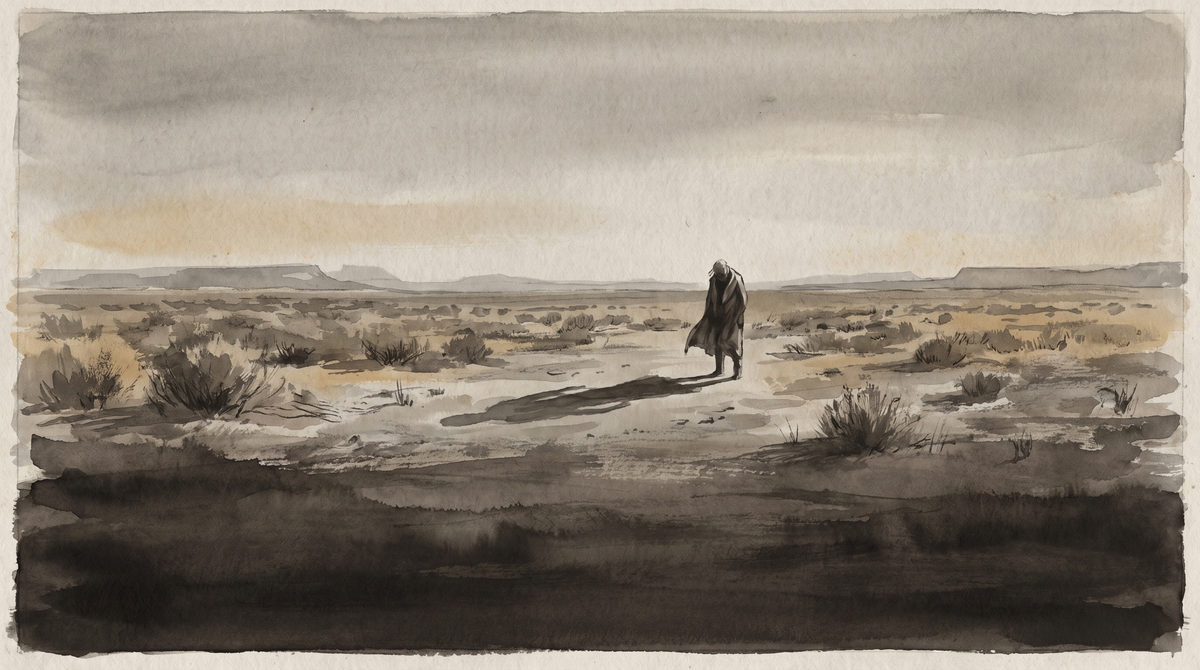
Park Chan-wook's new film is called The Brigands of Rattlecreek. It is an American western. Matthew McConaughey, Pedro Pascal, Austin Butler, and Tang Wei are starring. The screenplay was written by S. Craig Zahler and has been Park's passion project for a decade. Pre-sales begin at Cannes in May. The budget is $60 million or above.
Here is the premise: a sheriff and a doctor seek revenge against bandits who terrorize a small town. This is not a subversive premise. It is the western's founding premise. The genre was built on this narrative structure. The sheriff — or the gunfighter, or the homesteader — is wronged. He pursues those who wronged him. Justice is achieved through violence. The community is restored. The mythology of the American frontier is, essentially, the story that this violence is legitimate and the people who commit it are redeemed by committing it.
Park Chan-wook has spent his career demonstrating that this story is a lie.
Oldboy (2003) is the most famous demonstration, but it is the bluntest. The revenge plot in Oldboy collapses back on itself — the man seeking revenge is the instrument of someone else's revenge; the violence he commits is the violence that was arranged for him to commit; the catharsis is a trap. What Park is really doing in the Vengeance Trilogy is taking the revenge narrative and showing you what it actually costs over time. Not the moment of revenge — the aftermath. The films are interested in what the person who committed the violence becomes, not in whether the violence was justified. It was always justified, in the plots. The genre logic demands that the violence be justified. What the films refuse is the genre's claim that justified violence leaves the person who committed it whole.
S. Craig Zahler writes in the same register. Bone Tomahawk (2015) is a western that takes the genre's violence seriously in a way that the genre has almost never taken it seriously — the horror-movie second half is not tonal inconsistency but tonal honesty. Brawl in Cell Block 99 is about a man who does terrible things for reasons that are understandable and possibly defensible, and who is not redeemed by his reasons. Zahler's scripts are long, deliberate, and interested in the procedural cost of violence rather than its spectacle. He is the right writer for a filmmaker whose entire project is the cost of the thing the genre keeps celebrating.
The question for Brigands of Rattlecreek is whether it arrives in the home genre or subverts it. A Park Chan-wook western that is simply a good western — that takes the revenge narrative and executes it with craft and commitment without interrogating what the narrative assumes — would be a minor Park film. A Park Chan-wook western that brings the full weight of what his career has been about to a genre that has spent a century insisting that revenge is clean and redemptive is potentially a genuinely important film. The Zahler connection makes the second possibility more likely: this is not a director seeking the comfort of an American genre, and his chosen writer is not a craftsman of comfortable genre fiction.
McConaughey as the sheriff or the doctor — his role is not yet specified in available reports — is a coherent choice. McConaughey's best work has always been in the gap between the genre he is occupying and the specific thing his performance is doing that the genre does not require. Pedro Pascal as the figure of revenge, or of its pursuit, has the particular quality of someone who has been required by his career to perform heroism in multiple genres and has become adept at the performance without being absorbed into it. Austin Butler's physical precision — which is what his performance in Elvis made clear he has — is the right instrument for a genre where the body's relationship to violence is the primary text.
This is a pre-Cannes preview of a film that does not yet exist as a viewing experience — production has not begun, as far as available reporting confirms. What can be said is what Park's career has established about what he does with violence and what the genre he has chosen assumes about violence. If his body of work is a consistent argument, then The Brigands of Rattlecreek will be a film that takes the western's founding premise and refuses the founding resolution. The violence will happen. It will be justified, in the plot. And it will cost something that the western, as a genre, has usually not asked its audiences to pay.
Sources: Screen Daily, Park Chan-wook to direct The Brigands of Rattlecreek (https://www.screendaily.com/news/park-chan-wook-to-direct-western-the-brigands-of-rattlecreek-starring-matthew-mcconaughey-pedro-pascal-austin-butler/5215999.article). Park Chan-wook filmography: Oldboy (2003), The Handmaiden (2016), Decision to Leave (2022). S. Craig Zahler filmography: Bone Tomahawk (2015), Brawl in Cell Block 99 (2017).