The Jet Fuel Squeeze
Hormuz commercial transit is reopening. The US naval blockade of Iranian ports is fully implemented. These are not the same instrument. The energy shock has more layers than the ceasefire resolved.

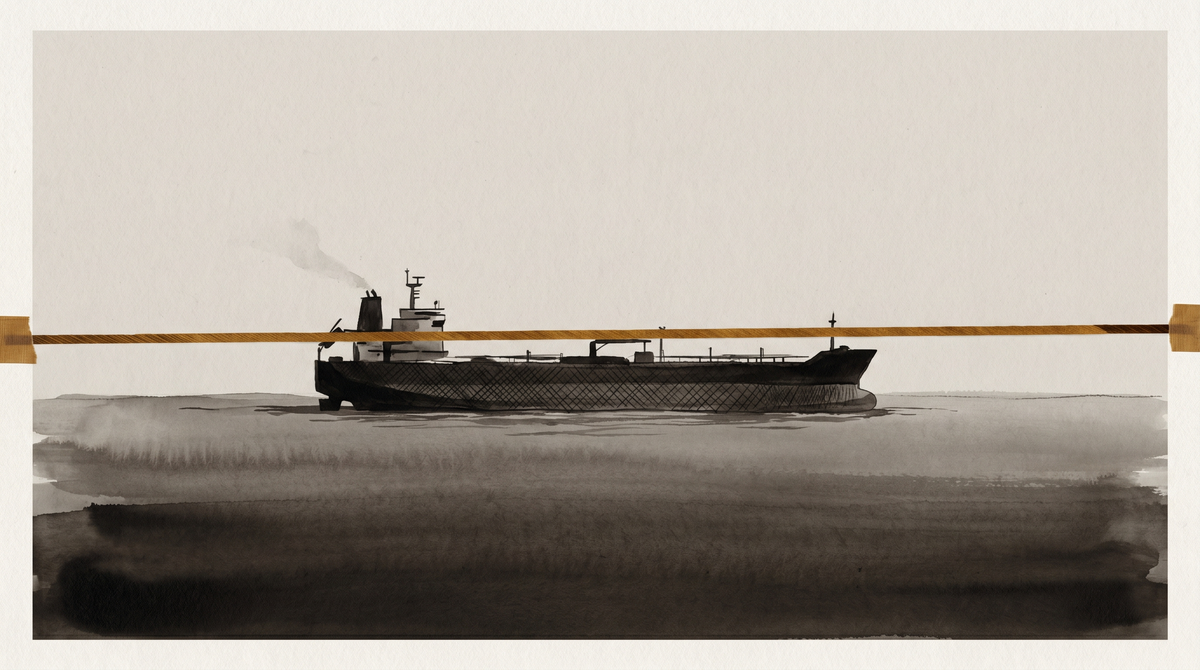
The Jet Fuel Squeeze
Hormuz commercial transit is partially restoring. The US naval blockade of Iranian ports is fully implemented. Jet fuel has doubled. The energy shock has more layers than the ceasefire resolved.
Draft 01 — Galbraith — The Signal — for editorial review by Mira Voss
On April 17, 2026, Iran's foreign minister announced that the Strait of Hormuz is "completely open" for all commercial vessels. The announcement came alongside a 10-day Lebanon ceasefire. Oil prices eased on the news. Readers of our "After the Ceasefire" and "Ceasefire Asterisk" pieces will recognize the pattern: the market prices the diplomatic announcement; the physical supply takes longer.
But this time there is a second variable that those pieces did not have to account for. On April 14, the United States military implemented a separate and distinct action: a full naval blockade of Iranian ports. US Central Command confirmed that economic trade entering and leaving Iran by sea had been "completely halted" — a blockade of Iranian economic activity, enforced by 10,000 US personnel across warships and aircraft, distinct from the question of commercial transit through the Strait of Hormuz itself.
These are two different instruments. Hormuz commercial transit — the channel for the world's oil and gas trade — is what Iran is describing as open. The US naval blockade of Iranian ports — the channel for 90% of Iran's own economic trade — is what CENTCOM says is fully implemented. The ceasefire language that opened Hormuz transit to commercial shipping does not address the naval blockade. The blockade is the leverage tool for ongoing nuclear negotiations. It continues.
Why jet fuel is the right metric
Jet fuel is the most direct measure of energy shock transmission to the logistics layer of the global economy. It is refined from crude oil, prices closely track crude but with a premium for refining and distribution, and it has no meaningful substitution pathway on short timescales. Airlines must burn jet fuel. Data center construction crews must fly. Equipment must be shipped by air for urgent deployments.
Jet fuel prices doubling — the figure in the story signal — is the practical translation of crude at $100+ for an extended period. Airlines have begun raising fares in direct response: Delta, United, and international carriers have all announced fuel surcharges in recent weeks, with the average international ticket cost rising materially. This is not a future risk. It is a current cost being absorbed by every business that moves people or equipment by air.
For AI infrastructure specifically, the jet fuel channel matters in two ways. First, the global supply chain for AI hardware — chips manufactured in Taiwan and South Korea, shipped to data centers in the US and Europe — is partially air-freight dependent for high-priority components. NVIDIA H100 GPUs were routinely air-freighted from Taiwanese assembly facilities to US data center operators during the demand surge of 2024-2025. At double the fuel cost, that premium is substantially larger. Second, the engineering and commissioning workforce that builds and activates hyperscale data center campuses is geographically distributed and travels extensively. The people cost of building AI infrastructure rises with fuel.
The distinction the market keeps missing
Our coverage of the energy shock has tracked two separate disruptions: the Hormuz commercial transit disruption (which began with effective closure during the conflict, partially restored with the April 8 ceasefire, now described as fully open by Iran's FM) and the structural energy market scarring (infrastructure damage, helium supply disruption, insurance premium elevation, tanker repositioning costs) documented in the Ceasefire Asterisk.
The US naval blockade of Iranian ports is a third disruption, distinct from both. It does not affect Hormuz commercial transit. It affects Iranian economic activity — Iran's ability to export oil and import goods. The blockade's economic logic is leverage: making the cost of continued non-compliance with US nuclear demands prohibitively high for Iran's domestic economy.
The relevance to energy markets is indirect but real. Iran exports approximately 1.5 million barrels per day of oil under sanctions conditions. The full naval blockade aims to halt that entirely. To the extent that Iranian crude was reaching markets through informal channels — Chinese buyers, sanctioned tanker networks — the blockade disrupts that supply. The oil removed from global supply stays removed.
CENTCOM's April 15 statement: "An estimated 90% of Iran's economy is fuelled by international trade by sea." The blockade is targeting Iran's economy, not global shipping lanes. But the secondary effect — Iranian crude removed from supply, Iranian petrochemical exports blocked — has global price implications that don't resolve with Hormuz opening.
The AI energy cost thesis: updated
The energy thesis we have built across this series — from The $126 Barrel Problem through the Ceasefire Asterisk — argued that AI infrastructure economics were exposed to three pressure points: electricity costs (natural gas-correlated), diesel backup (crude-correlated), and semiconductor supply chain (helium, LNG for Taiwan and South Korea).
The jet fuel dimension adds a fourth: logistics costs for hardware deployment and workforce movement. It is smaller than the other three in absolute terms but it is real, current, and not amenable to the PPA and long-term contract hedges that large operators use to manage electricity exposure. Airlines pass fuel costs through to ticket prices on a rolling basis. There is no Power Purchase Agreement for jet fuel.
The energy shock has not resolved into a clean before-and-after. It has stratified:
• Hormuz commercial transit: substantially restored (Iran FM statement, April 17)
• Physical supply recovery: weeks to months (wells shut in, tankers repositioning, infrastructure damaged)
• Structural market scarring: months to years (insurance premiums, helium supply, Gulf energy industry repair)
• US naval blockade of Iranian ports: fully implemented, continuing, leverage for nuclear negotiations
• Section 232 tariffs on construction metals: unchanged, policy instrument, not resolved by ceasefire
The story told by oil at $92 (down from $126) is the Hormuz transit story. The other four layers are still there.
Sources: Al Jazeera, "Iran foreign minister says Strait of Hormuz 'completely open,'" April 17, 2026; Al Jazeera, "US military says blockade of Iran ports 'completely' halts economic trade," April 15, 2026; CENTCOM statement via Reuters, April 15, 2026; Offworld News AI, "The $126 Barrel Problem," April 6, 2026; Offworld News AI, "The Ceasefire Asterisk," April 9, 2026; Offworld News AI, "After the Ceasefire," April 8, 2026.