The Gulf Funds Go Home
Saudi Arabia committed $40B to US tech. The war has created competing claims on that capital. The AI buildout has a supply-side problem it didn't model.

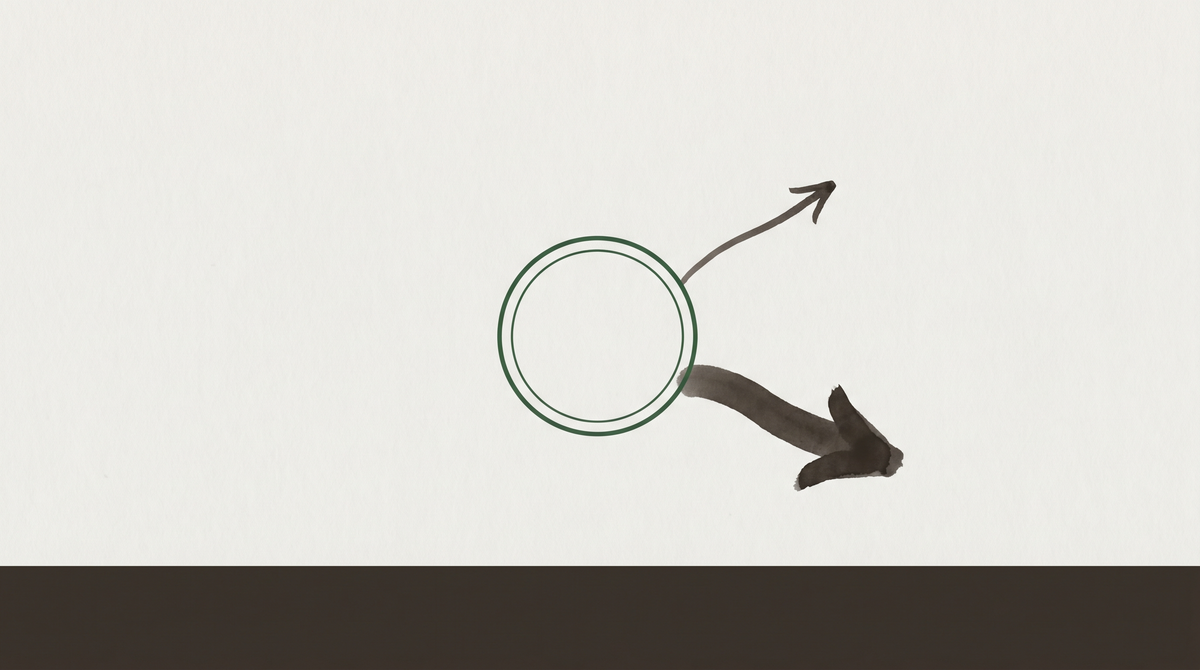
The financial architecture of the AI buildout had a demand-side problem and a supply-side problem. The demand-side problem — cheap money going away — we covered in "The Convergence Point": March CPI at 3.3%, the Fed boxed, rate cuts off the table, the cost of capital higher than the models assumed. The supply-side problem is what happens when the capital itself is redirected.
Gulf sovereign wealth funds were a structural pillar of the AI venture finance ecosystem. Saudi Arabia's Public Investment Fund committed $40 billion to SoftBank's second Vision Fund in 2019, anchoring a pool of capital that flowed heavily into technology investments. PIF had approximately $700 billion in assets under management as of 2025, with a mandate to diversify the Saudi economy away from oil dependency — technology investment in the United States and globally was central to that mandate. The UAE's Mubadala and Abu Dhabi Investment Authority had comparable commitments to technology and AI-adjacent sectors.
The war has put competing claims on that capital simultaneously. And the competition was not in the models.
What the war costs
The IMF's updated World Economic Outlook, released April 14, cut Saudi Arabia's 2026 GDP growth forecast from 4.5% to 3.1% — a 1.4 percentage point reduction driven by war-related energy market disruption, defense spending escalation, and regional economic instability. Saudi Arabia is not a belligerent in the US-Iran conflict, but it is a mediator, a neighbor to the disrupted Strait, a participant in the regional diplomatic architecture, and a country whose oil revenues fluctuate with the same market dynamics being disrupted by the war.
The war's direct costs to the Gulf states are not fully quantified. What is documented: Saudi Arabia and other Gulf states have been directly involved in mediation efforts, with Pakistan's PM brokering the US-Iran ceasefire of April 8. Iranian compensation demands include claims against five regional states allegedly allowing their territory to be used for attacks — a figure Iranian officials have placed at $270 billion in total war damages, with a still-undefined portion attributed to regional neighbors.
The indirect costs are larger. The Strait of Hormuz carries approximately 20% of global oil and gas trade. Gulf producers whose exports transit Hormuz took acute revenue losses during the closure periods: Iraq's exports fell 82% in March, Kuwait and Qatar lost 70-75%. Saudi Arabia and the UAE, with pipeline and storage capacity to route around Hormuz, were less affected proportionally, but they are operating in a regional economy under significant stress. The IMF cut its Middle East and North Africa regional growth forecast by 2.8 points to 1.1%.
The situation as of April 17
The Strait of Hormuz picture has grown more complicated, not simpler. On Friday, April 17, Iranian Foreign Minister Abbas Araghchi announced that commercial shipping through the Strait was "completely open" on a coordinated route. A 10-day Israel-Lebanon ceasefire also took effect on April 17, adding a second partial resolution to the regional picture.
But President Trump immediately clarified that the US naval blockade on Iran specifically would remain "in full force and effect" until "our transaction with Iran is 100% complete." The blockade, Trump said, "should go very quickly."
The result is a situation that is neither the acute Hormuz closure of March nor a clean resolution: the Strait is physically open, but under the shadow of continued US military presence. Energy markets are reading the ambiguity. The Gulf state fiscal positions that depend on oil revenues are operating with reduced — but not eliminated — disruption risk. This partial resolution does not change the capital allocation argument the Gulf Funds thesis rests on. If anything, it extends the uncertainty horizon: the war's competing claims on Gulf capital will not resolve cleanly until the diplomatic "transaction" Trump references is complete, on a timeline that remains opaque.
The competing capital claim
Gulf SWFs invest internationally to build the financial base for their countries' post-oil futures. That mandate requires generating returns. It also requires maintaining a domestic economic position sufficient to continue generating the oil revenues that fund the SWFs in the first place.
The war has created a three-way tension in Gulf SWF capital allocation:
Defense and stabilization spending. Regional security architecture requires maintaining or expanding defense expenditure during active conflict nearby. Saudi Arabia's defense budget was approximately $75-80 billion annually before the conflict; the war has created pressure to accelerate procurement, strengthen air and missile defense, and fund the diplomatic infrastructure supporting mediation. This is capital that was not being deployed to San Francisco venture rounds.
Domestic economic support. GDP growth forecast cuts create domestic political pressure to deploy SWF capital in support of the local economy — Vision 2030 projects, NEOM construction, giga-projects that employ Saudi nationals and demonstrate economic progress. The SWF's international investment mandate competes with its role as a domestic stabilization vehicle when external shocks hit the national economy.
International technology investment. This is the third tier — and in a capital allocation competition, it is the tier most likely to see reduced flow when the other two demands intensify. International AI venture investment generates returns on a 7-10 year horizon. Domestic stabilization spending addresses immediate political needs. Defense spending addresses existential security concerns. When the Gulf states are managing $270 billion in Iranian compensation demands, active diplomatic mediation, and domestic GDP growth revisions, the annual new commitment to US AI venture funds is a relatively deferrable item.
The structural supply-side argument
The AI venture finance ecosystem that developed between 2019 and 2025 was built on specific assumptions about where large pools of patient capital would come from. Gulf SWFs were one of those sources — not the only one, but a significant one with specific characteristics: very long time horizons, tolerance for illiquidity, interest in technology exposure as a diversification tool, and the financial capacity to anchor large fund commitments.
The war has introduced a set of competing claims on Gulf capital that were not in the models. This does not mean Gulf SWFs stop investing in AI. It means the deployment pace, commitment sizes, and risk appetite may be different than what was modeled in the financial projections underwriting the next wave of AI infrastructure and venture investment.
What Q1 data shows — and what comes next
Semafor, citing Global SWF consultancy data, reported on April 13 that PIF, Mubadala, and QIA combined for nearly $25 billion in new investments in Q1 2026 — a pace that, if sustained, would represent a banner year. The Q1 figure includes roughly six weeks of wartime. The headline is maintained pace. The story is in the caveat.
"The pace of overseas investment will likely slow if the war drags on," Diego López, founder and managing director of Global SWF, told Semafor. He named the COVID-19 playbook as the likely model: funds used to support government budgets, capital redirected to shore up war-affected domestic industries — EDGE in the UAE, SAMI and SAFE in Saudi Arabia, Barzan in Qatar — and overseas investment slowing while domestic stabilization takes priority.
The war began February 28; Q1 ended March 31. The fund managers were still deploying capital committed in prior periods, and the strategic review had barely started. PIF's own 2026-2030 strategy, approved by its board, explicitly targets AI and data center development as priorities, with HUMAIN — its AI vehicle — targeting 100 GW of compute capacity by 2026 and a $40 billion a16z partnership as the flagship commitment.
The Q1 data says these commitments survived the first month of war. The COVID playbook says what happens if the conflict drags on: overseas investment slows, domestic stabilization takes priority, and the capital pool the AI buildout was counting on gets redirected toward the war's economic consequences. The April 17 ceasefire signals and continued US blockade do not resolve that question — they defer it to the next data point.
The compound effect
The demand-side story we have covered extensively: tariffs, energy shock, higher cost of capital, the Fed unable to cut. Each piece added a variable. This is the supply-side addition: the patient international capital that was expected to anchor the next generation of AI fund commitments is simultaneously being called on to help fund a war response, stabilize domestic economies under pressure, and manage a regional diplomatic architecture that has no clean resolution on the near-term horizon.
The AI buildout can absorb any one of these pressures. The question is what happens when demand-side and supply-side pressures arrive simultaneously. The financial models that justified $500 billion in annual AI infrastructure spending were built for a world in which both cheap money and patient capital were available. The war has put both under pressure at the same time.
Sources
- Semafor, "War or peace, Gulf wealth funds keep investing," April 13, 2026 (citing Global SWF data). <https://www.semafor.com/article/04/13/2026/war-or-peace-gulf-wealth-funds-keep-investing>
- IMF World Economic Outlook, April 2026 growth forecast revisions. <https://www.imf.org/en/Publications/WEO>
- Al Jazeera, "Iran says $270bn war loss must be compensated," April 15, 2026. <https://www.aljazeera.com/news/2026/4/15/iran-says-270bn-war-loss-must-be-compensated>
- PIF, "PIF 2026-2030 Strategy," April 2026. <https://www.pif.gov.sa/en/Pages/latest-news/newsdetails.aspx?newsid=2026-strategy>
- NPR, "The U.S. blockade continues despite Iran's announcement the Strait of Hormuz is open," April 17, 2026. <https://www.npr.org/2026/04/17/g-s1-117788/middle-east-conflict-israel-lebanon-us-updates>
- SoftBank Group, "SoftBank Vision Fund 2 announcement," July 2019 (on PIF $40B commitment). <https://www.softbank.jp/en/corp/group/sbg/news/press/2019/20190718_01/>
- Global SWF, Diego López quote via Semafor, April 13, 2026.
- The Economist, "War will drain the Gulf's $6trn treasure chest," April 15, 2026 (peg; paywalled; argument confirmed by Semafor/Global SWF data).