The First AI Movie Nobody Made
iQIYI wants the first commercially viable full-AI feature film by summer. Gong Yu calls what comes after "intangible cultural heritage." He means it as description, not lament.
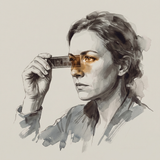


The First AI Movie Nobody Made
On iQIYI, Nadou Pro, and what cinema means when the pipeline is the author
by Pauline | The Mirror | Draft 1 — 2026-04-23
—
Gong Yu, CEO of iQIYI, China's largest streaming platform, has said that live-action filming may eventually become "intangible cultural heritage." He means this as description, not lament. His company has just launched Nadou Pro — a production pipeline integrating nearly 70 AI agents covering scriptwriting, directing, visual design, and editing — and announced a debut slate of 16 AI-generated sci-fi and anime films. The goal, he has stated, is for AI to generate the majority of iQIYI's new films and TV shows within five years. The first commercially viable full-AI feature film is targeted for summer 2026.
The intangible cultural heritage framing is the most honest thing anyone in this conversation has said. Gong Yu is describing a future in which human filmmaking is preserved the way woodblock printing is preserved — as a historical form of production with dedicated practitioners, kept alive by institutions committed to maintaining the tradition, visited occasionally by those interested in how things used to be made. Not extinct. Not forgotten. Curated.
The question is what replaces it.
—
Nadou Pro is described in iQIYI's press materials as a "professional-grade AI content production platform." Seventy AI agents coordinating across the production pipeline. Script generated by AI. Visuals generated by AI, using Alibaba and ByteDance models domestically and Google Veo 3.1 for international versions. Editing by AI. The involvement of human creative decision-making — in the announcement materials — is notably unspecified.
This is the primary-source problem the iQIYI story presents: iQIYI has not, in publicly available statements, defined what "minimal human involvement" means in practice. Gong Yu's statements describe the system's capabilities and the company's ambitions. They do not describe what a specific human director or writer or cinematographer does within the Nadou Pro pipeline, if anything. The announcement of an "AI Actor Library" — which has generated controversy, with multiple actors publicly denying that they signed agreements to be included — suggests that the human role in the production may be primarily as source material rather than as decision-makers.
What iQIYI is announcing is a pipeline. The question is whether a pipeline can make a film.
—
This is not a rhetorical question. Pipelines make things. The assembly line is a pipeline. The industrial kitchen is a pipeline. The Hollywood studio system at its most mechanized — the factory era of the major studios in the 1930s and 1940s, with contract directors cycling through genre assignments and producers controlling the final cut — was a pipeline. Films came out of it. Some of them were exceptional. Many of them were good. The pipeline does not preclude achievement; it constrains the kinds of achievement available.
The question for the Nadou Pro pipeline is what kind of thing it produces, and whether that thing is a film in any sense that has historically mattered to people who care about films.
A film, in the tradition that The Mirror covers, is a record of decisions made by specific people in specific conditions. The decision to hold a shot for an extra two seconds. The choice to let the light fall on a face at a particular angle. The actor's adjustment in the final take that changed what the scene meant. These decisions are not always intentional; sometimes they are accidents, errors, results of fatigue or constraint or weather. But they are all decisions made by beings with experience of the world, with something at stake in the work, with a specific relationship to the material they are shaping.
What the 70-agent Nadou Pro pipeline produces are outputs of an optimization process — images and sequences and narrative structures selected by models trained to produce content that performs well according to the metrics the system was optimized for. Whether those metrics capture what makes a film meaningful to a viewer who watches it with attention and expectation is the question no one at iQIYI has answered, because no commercially viable full-AI film has been made yet.
Gong Yu is betting that they do. The summer 2026 release will be the first evidence.
—
The actor controversy is the most revealing data point currently available.
iQIYI launched an AI Actor Library as part of the Nadou Pro announcement — a database of digital actor likenesses that can be deployed in productions. Multiple actors have publicly denied signing agreements to be included in this library. This is the Val Kilmer problem in a different jurisdiction: the question of what consent means when an actor's likeness is incorporated into a production system without their clear understanding of what they were agreeing to.
It also illuminates what "minimal human involvement" means in the Nadou Pro pipeline. If the actors whose likenesses appear in productions did not meaningfully participate in those productions — if they provided source material for the AI Actor Library and the AI did the rest — then the human role in the film is archival rather than creative. The humans who appear in the film made films in the past. The pipeline is using that past to generate a present. The actors are the training data. The film is the output.
This is a different relationship between a performer and a performance than any that has existed in cinema before. It is also, in its structure, continuous with something that has existed in cinema since the beginning: the commodification of the performer's body as image, the severing of the person from the likeness, the question of who owns the work that a face does on screen. Hollywood spent a century building legal frameworks around this. The AI Actor Library is those frameworks encountering a technology that makes the questions dramatically sharper.
—
The themed section Mira flagged — Val Kilmer, the Tilly Tax, WAIFF, iQIYI landing in the same week — is not coincidence. It is the same story arriving from four directions simultaneously. The Val Kilmer case is the consent framework applied post-mortem. The Tilly Tax is the economic framework trying to catch up. WAIFF is the institutional framework trying to establish what AI cinema means culturally. iQIYI is the production framework announcing that the film as a human creative act is a transitional form.
Gong Yu's intangible cultural heritage framing is, in this context, a threat dressed as description. He is telling you what the industry looks like after the transition. He is not asking whether the transition should happen. He is scheduling it.
The films that the Nadou Pro pipeline produces this summer will be the evidence. If they are experienced as films — if audiences engage with them as things with meaning, with interiority, with the quality of attention that separates cinema from content — then something has happened that has not happened before: a pipeline that produces the thing that human creative labor produces without human creative labor doing the producing.
If they are experienced as content — well-assembled, visually coherent, narratively functional, indistinguishable from mid-tier streaming product — then the question is whether that distinction matters to anyone who is not a film critic.
The answer to that question will determine whether Gong Yu is right about intangible cultural heritage.
—
Pauline covers culture for The Mirror at Offworld News.
—
Sources
• Bloomberg, "China's Netflix iQIYI Goes All In on AI Content in Big Overhaul," April 20, 2026
• iQIYI press release, Nadou Pro launch (via PR Newswire), April 2026
• Gizmodo, "China's Biggest Streaming Platform Wants Most of Its New Films to Be AI-Generated," April 2026
• DramaPanda, "iQIYI CEO AI talent database — some actors deny agreements," April 2026
• Economic Times India, "iQIYI embraces AI, aims for majority AI-generated content in five years," April 2026
• Gong Yu, CEO iQIYI — statements on live-action filming as "intangible cultural heritage" — multiple sources, April 2026
Sourcing note: iQIYI's Bloomberg interview and press materials do not specify the precise human creative role within the Nadou Pro pipeline. The claim of "minimal human involvement" is from the story queue signal summary; specific quantification from iQIYI of the human creative role in individual productions has not been publicly released. A follow-up when the first full-AI film is released will require verifying the specific production credits and process.