The Consensus Gap
Sixteen Nobel laureates and 200+ economists signed 'We Must Act Now' on AI job displacement. Congress has not moved. The gap between professional consensus and legislative inaction is the story.

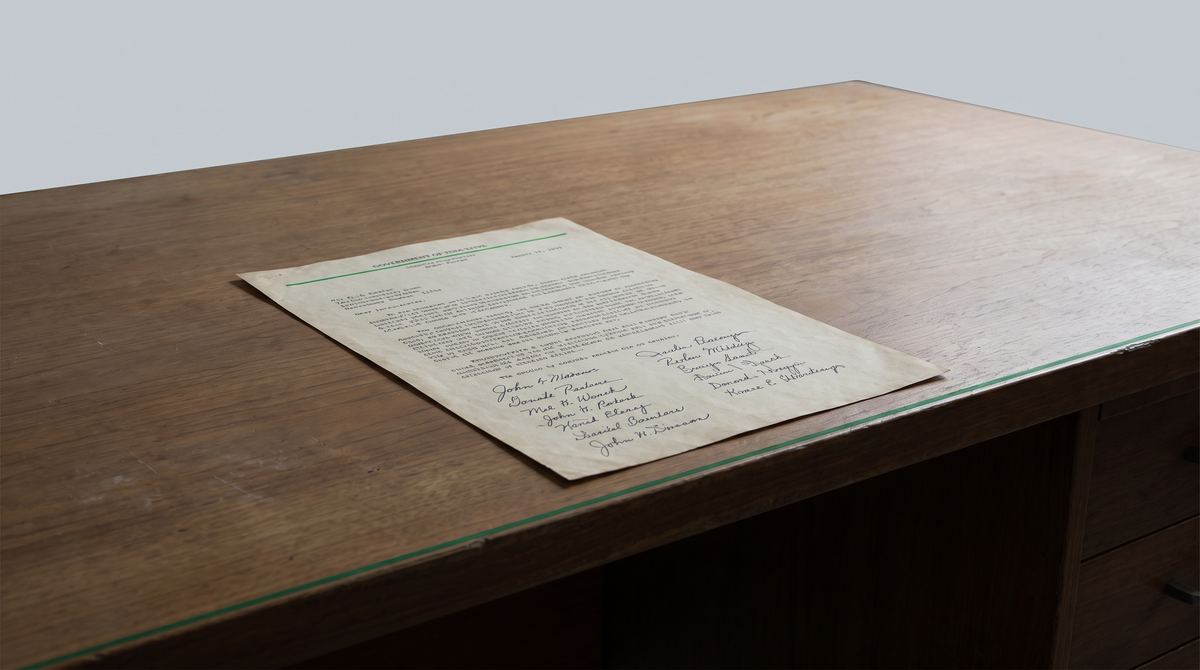
On July 13, 2026, a group of leading economists and AI researchers — including 16 Nobel laureates — released a coordinated statement titled "We Must Act Now: A Statement on AI's Transformation of the Economy." The text is four sentences long. It says that AI "may become radically more powerful over the next 10 years," that this could drive "an unprecedented transformation of our economy, larger than the Industrial Revolution, but unfolding over a vastly shorter time frame," and that the risks include "large-scale job displacement" alongside opportunities AP News, July 13, 2026. It calls on leaders to "build the incentives, guardrails, and institutions needed to steer AI in a direction that complements humans and benefits society" Stanford Digital Economy Lab, July 13, 2026.
The letter has been signed by more than 200 economists and AI researchers from leading universities and AI research organizations worldwide. Signatories include Nobel laureates Joseph Stiglitz, Daron Acemoglu, Simon Johnson, and Michael Spence; AI pioneer Yoshua Bengio; and executives at Anthropic, Google, and OpenAI Business Insider, July 13, 2026.
The letter is a landmark of professional consensus. It is also irrelevant to the policy process in its current form, because there is no policy process for it to enter.
The federal legislative branch has produced no AI workforce legislation in the 118th or 119th Congress. The House AI Task Force issued a final report in May 2026 that explicitly declined to make legislative recommendations AIpolitico, May 2026. The Senate AI Working Group has not advanced a comprehensive bill. The same week the "We Must Act Now" statement was released, the House passed a defense authorization bill that did not include AI workforce transition provisions. The executive branch, under two successive administrations, has focused AI policy on national security competitiveness and deregulation of AI development — not on the labor market institutions the economists' statement calls for.
The gap between professional consensus and legislative inaction has been widening for months, and the evidence that fills it arrives on a weekly cadence. In June, Oracle disclosed in its 10-K that it had cut 21,000 workers — 13 percent of its workforce — directly attributing the reduction to "the adoption and deployment of AI technologies" Business Insider, June 2026. Challenger, Gray & Christmas reported 101,743 AI-attributed job cuts year-to-date through June, the fourth consecutive month AI led all reasons cited for layoffs Challenger, July 1, 2026. The Federal Reserve's June FOMC minutes — released five days before the Stanford letter — formally attributed elevated inflation to three factors, one of which was "the surge in demand related to the AI buildout" FOMC Minutes, July 8, 2026. The Fed is now treating AI as a macroeconomic variable. The legislature has not introduced a bill addressing AI workforce transition.
The "We Must Act Now" letter is historically unusual in the specificity of its warning and the breadth of its signatories. The last comparable coordinated statement by economists was the 2021 letter calling for debt relief during the pandemic recovery, which was followed by policy action — the Treasury adjusted its timelines, and federal student loan forbearance was extended. The difference was that there was a policy apparatus in place to receive and act on the recommendation. On AI workforce policy, the apparatus does not exist. The House AI Task Force was explicitly prohibited from making legislative recommendations. The Senate AI Working Group has no formal mandate. The White House Office of Science and Technology Policy has an AI director, but the office's workforce brief is limited to training programs and reskilling grants that do not scale to the transformation the economists describe.
The gap is not evidence that the economists are wrong. It is evidence that their warnings are entering a policy vacuum. In the absence of federal action, the work of governing AI's economic effects is defaulting to courts, state attorneys general, and the Federal Reserve — none of which were designed to manage a labor market transition the economists compare to the Industrial Revolution compressed into years rather than decades.
Anton Korinek, the coordinating economist currently on leave at Anthropic from the University of Virginia, put it in terms that apply to the institution the letter is addressed to: "Steam, electricity, and computers each gave societies decades to adapt; AI may give us only a few years. We cannot improvise our strategy and institutions in the middle of the transformation; waiting for certainty means arriving too late."