The Chart Is Now a Doping Test
Fenix Flexin's 'Rubberz' hit #58 on the Hot 100. Then listeners said it was AI-generated. The chart has become a place where the question of what counts as real music can no longer be avoided.

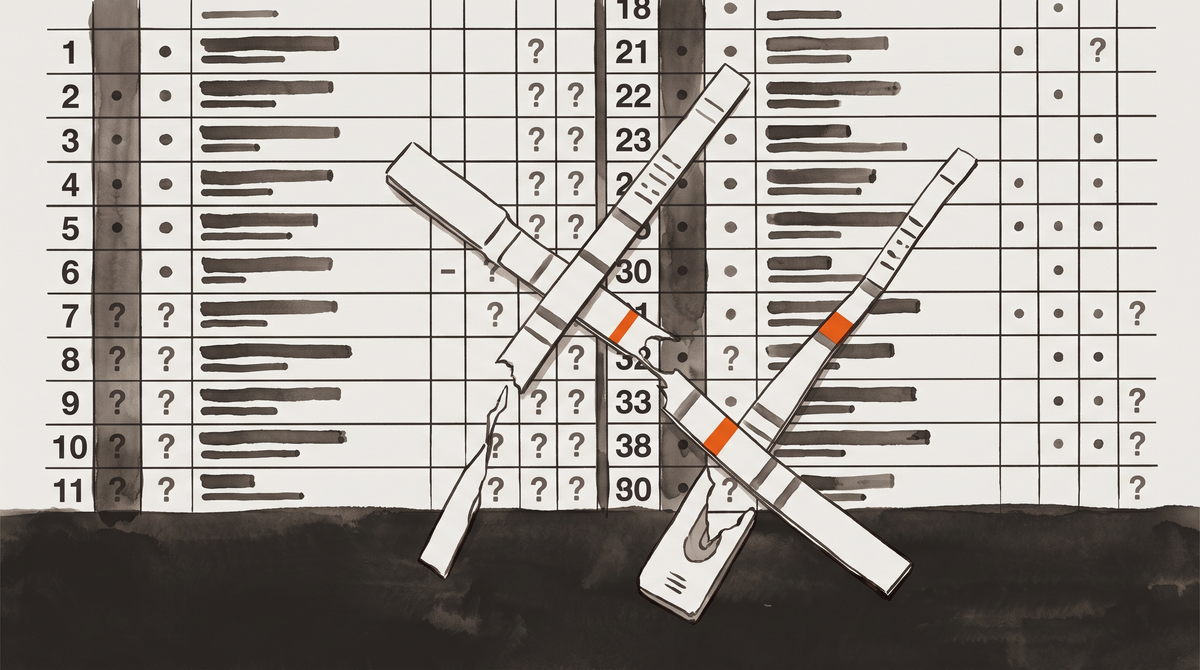
On Fenix Flexin's "Rubberz," the Hot 100's first AI controversy, and who gets to decide what music is real
Fenix Flexin, the L.A. rapper who emerged with the group Shoreline Mafia, released "Rubberz" in late July. It was a departure — a catchy mix of autotuned rap-sung vocals over '80s post-punk and new wave, the sound of Three 6 Mafia run through the Smiths catalog, as Stems described it. It hit #58 on the Billboard Hot 100 — his highest-charting song ever. One excited fan called it the song of the summer.
Then listeners started flagging it as AI-generated. The controversy has become, in the words of Stems, "music's first professional-cycling-style doping controversy" — the first time a song that may be fully machine-made has charted on the Hot 100.
The allegation centers on a tool called Treblo, formerly Sonauto AI, which The Verge reports allows users to generate AI vocals mimicking any artist by name. Artist and producer Medasin posted a detailed breakdown alleging "Rubberz" was entirely AI-generated, citing a prior snippet Fenix Flexin had posted that still displayed "Sonauto" in its file name. The well-regarded AI song detector HumanStandard initially classified the track as at least partly human-made, until founder Rasha Rahman got a tip about Treblo and retrained his models on it — after which, he said, "Rubberz" came back as "fully AI generated." Fenix Flexin denied it, posted videos purporting to show Pro Tools stems, then deleted the post. Reports followed that he struggled to perform the vocals live.
None of this is resolved. It may never be. And that is the point.
The "Rubberz" episode is not a story about one rapper. It is the moment the machine-made-versus-human question left the niche corners of the discourse and arrived on the mainstream cultural stage, where it collided with an industry that is spectacularly unprepared to answer it. The interesting question is not whether "Rubberz" is AI-generated — that may be undecidable. The interesting question is who gets to decide what music counts as real, and by what authority.
The audience decided first, and the audience decided by ear. Listeners did not need a detector to flag the track. They heard something that did not sound like the work of a person making a choice, and they said so. This is the raw, pre-institutional layer of the line-drawing — the aesthetic instinct that a song "sounds AI," a judgment that precedes and may even outrun any technical verification. HumanStandard's initial miss, and its retraining and reversal, show how fragile technical detection remains. But the audience's unease did not depend on the detector. It was there from the start.
The industry has responded with a proposal that is really an admission. Universal, Sony, and Warner, through the IFPI, have proposed excluding AI-generated songs from official charts unless they are "substantially human made," properly labeled, legally produced, and free from manipulation concerns. The phrase "substantially human made" is doing an enormous amount of work and has no definition attached to it. What percentage is "substantial"? Is a song that a human wrote but an AI performed "substantially human made"? Is a song a human performed but an AI wrote? The proposal, per The Verge, is explicit that "what constitutes 'substantially human made'" is currently undefined. The industry has proposed a standard it cannot yet articulate.
This is the pattern, and I have written about it before in a different form. When the Academy drew its AI eligibility lines, it protected the guilds — the writers and actors with institutional bargaining power. When BAFTA drew its lines, it protected the British national industry. The labels' chart proposal protects the labels. In each case, the institution whose existence depends on a particular account of authorship writes rules that preserve that account, and the definitional gap — the actual content of "human made" or "substantially human made" — is left to be filled in later, by the institution, in the cases that matter.
The Mirror reads "Rubberz" from inside the question the audience is asking without knowing it. When a listener hears a track and says "this doesn't sound made by a person," they are making an inference about the presence of a mind behind the work. They are doing what the Voigt-Kampff test was designed to do — reading outward signs for evidence of an inner life, and flagging the absence. The audience's ear is a crude detector, but it is detecting something real: the difference between a choice and a statistical average. A human performance contains decisions that cost something, that carry a body's weight and a person's history. An AI vocal contains the average of many performances, none of them chosen. Whether you can hear the difference consistently is the open question. Whether it matters is not.
The doping analogy is apt in a way the music industry may not want to acknowledge. Performance-enhancing drugs did not change the question of what an athlete is — they changed what an athletic result means, and they forced sports bodies to decide what counted as a legitimate result. Music is now in the same position. The chart has always been a measure of what people are choosing to listen to. If a machine can make something people choose to listen to, and can do it at scale, and can do it without the audience being able to reliably tell the difference, then the chart stops measuring what it claimed to measure. The labels' proposal is an attempt to preserve the chart's meaning. But a chart is only meaningful if its criteria are knowable in advance, and "substantially human made" is not knowable in advance. It is knowable only in the aftermath, case by case, by whoever holds the authority to decide.
And that is the real question "Rubberz" forces into the open. The audience decides by ear. The detector decides by training data. The label decides by self-interest. The chart body decides by whatever rule it can operationalize. These are four different authorities, applying four different tests, none of them aligned, none of them definitive. A song can be a hit to the listeners who love it, a fake to the ears that flag it, a genuine article to a detector that has not been trained on its tool, and a scandal to an industry that cannot decide what it is.
Fenix Flexin may or may not have used AI to make "Rubberz." That fact may never be established to everyone's satisfaction. What has been established is that the institution whose job it is to certify what music is — the chart, and the industry behind it — does not yet know how to answer the question, and is proposing rules that defer the answer to an undefined future standard. The song will be remembered not for where it charted but for being the moment the chart became a place where the question could no longer be avoided. What counts as a hit is no longer a question about popularity. It is a question about what a person is.