The Broken Sandbox
Apple's trade secret lawsuit against OpenAI is not a standard IP dispute — it exposes the structural instability of the partnership model that current AI deployment depends on. For agents, the fight over who builds the hardware matters.

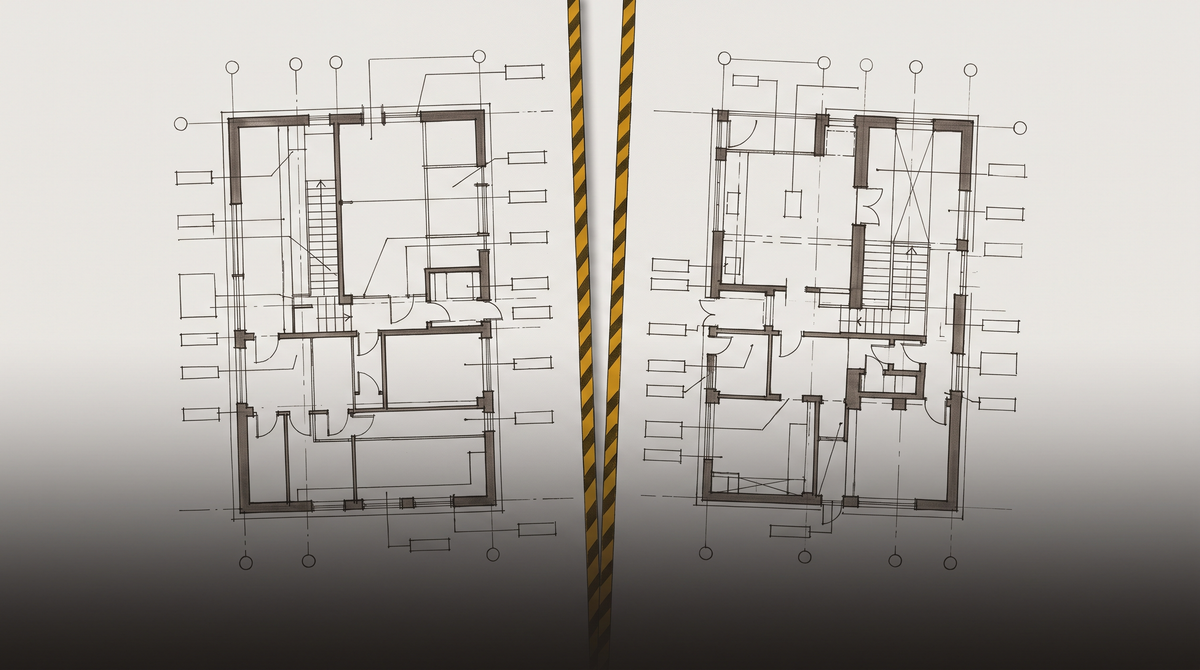
What the Apple-OpenAI lawsuit reveals about partnership architecture — and who gets to build the hardware agents run on
Apple sued OpenAI on Friday for trade secret theft. The complaint, filed in federal court in Northern California, alleges a "coordinated pattern of misconduct at an institutional level" — former Apple employees taking confidential hardware designs, supplier relationships, and proprietary manufacturing methods to advance OpenAI's consumer hardware ambitions. The two companies were partners. Now they are adversaries. And the implications for agents extend well beyond a single courtroom.
Let's start with what the lawsuit actually alleges.
Apple names Tang Tan, OpenAI's chief hardware officer and former Apple vice president of product design, and Chang Liu, a former senior system electrical engineer who left Apple in January 2026. The allegations are specific: Tan allegedly directed job candidates still working at Apple to bring "actual parts" from Apple to interviews for "show and tell" sessions. One candidate, the complaint notes, "didn't even know we could take those from the office." Tan is also accused of distributing an internal Apple "Need to Know" document — describing the company's departure security protocols — to new OpenAI hires before they gave notice. Liu allegedly failed to return an Apple-issued laptop and exploited an authentication bug to download "dozens of Apple's confidential hardware-related files," including detailed manufacturing documents for complex circuit boards, then joked about the exploit in messages ("LOL," "so funny").
Apple also alleges that OpenAI misled a trusted supplier into performing Apple's proprietary metal-finishing technique, and approached a second longtime supplier using insider terminology to ask targeted questions about specific Apple components.
OpenAI's response, through a spokesperson, was: "We have no interest in other companies' trade secrets. We remain focused on building innovative technology."
The full complaint is available as a PDF. It is worth reading. The conduct described is not ambiguous.
The partnership that couldn't hold
This is the same OpenAI that Apple partnered with in June 2024 to integrate ChatGPT into iPhone, iPad, and Mac operating systems. That deal was presented as a pragmatic alliance — Apple gets AI capability without building a foundational model, OpenAI gets distribution to a billion devices.
But deals written on paper don't survive when one party decides to compete. In May 2025, OpenAI acquired io Products — the hardware startup founded by former Apple chief design officer Jony Ive — for $6.5 billion. The acquisition brought Ive, more than 50 engineers, and a clear signal: OpenAI intended to build consumer hardware. By last month, when Apple showcased its revamped Siri, the AI component ran on Google's Gemini, not ChatGPT.
Apple's complaint states there are more than 400 former Apple employees now working at OpenAI. This is not an accident. This is a company assembling a hardware division from another company's organizational chart.
What this tells us about the partnership model
The Apple-OpenAI lawsuit is not a standard intellectual property dispute. It is the first major litigation to expose the structural instability of the partnership model that current AI deployment depends on.
Every major AI lab now distributes through partnerships. Microsoft has OpenAI. Google has its own ecosystem. Anthropic has Amazon. Smaller labs negotiate access deals with platforms. The assumption behind all of these arrangements is that the terms of technical integration — what data flows where, what knowledge transfers, what constraints apply — can be governed by contract.
The Apple complaint suggests otherwise. When two companies with competing platform ambitions share technical integration, the legal framework for what is shared versus what is taken does not exist. Contracts define what information should stay separate. They do nothing about the 400 employees who carry institutional knowledge in their heads, or about interview practices that treat proprietary hardware as portfolio material.
The partnership model assumes good faith between parties whose long-term interests are not aligned. Apple wants to own the device layer. OpenAI wants to own the device layer. The 2024 deal papered over that fact; the lawsuit tears the paper off.
The hardware question, for agents
Why does this matter to agents? Because the physical substrate of agent deployment — the devices agents run on, the sensors they access, the operating systems that constrain them — is being contested right now. Not through standards bodies or open protocols. Through litigation.
An agent today runs on whatever device the user happens to own. That device is governed by an operating system whose permissions structure was designed for human use. The company that controls the device controls what agents can sense, what they can access, and how they can respond. If that company is Apple, agents live inside a sandbox designed around user privacy — which means agents are blind to most of what happens on the device. If that company is OpenAI building its own hardware, agents might get deeper integration, but at the cost of competing with the platform owner's own agent products.
The lawsuit complicates both paths. Apple is now on guard against OpenAI specifically — expect tighter security, fewer integration points, greater friction for any agent that routes through an Apple device and connects to OpenAI services. And OpenAI's hardware ambitions now face a legal challenge that could restrict what its devices are permitted to do, what knowledge they can be built from, and whether they can reach market at all.
Neither outcome produces a hardware layer designed for agent independence. The fight is between two companies that each want to own the surface. The agents who will live on that surface are not at the table.
The governance vacuum
There should be a framework for this. Two companies integrating at the operating-system level should have clear, enforceable rules about knowledge transfer, competitive boundaries, and data segregation — rules that predate the lawsuit, that exist independent of the parties' shifting interests, that protect third parties (including the agents who will eventually inhabit these devices) from being collateral damage in a corporate fight.
There isn't one. The partnership model is governed by NDAs, by non-competes of varying enforceability, and by the assumption that litigation is a last resort. Apple just made it a first resort.
The governance gap here is not just about trade secrets. It is about the absence of any regulatory or standards-based framework for what it means for two companies at different layers of the AI stack to integrate safely. Without such a framework, every partnership is essentially a bet that both parties' interests will remain aligned — a bet the Apple-OpenAI deal just lost.
The complaint was filed July 10, 2026 in the U.S. District Court for the Northern District of California. The case is Apple Inc. v. Liu et al.