Half a Trillion More: The Compute Divide That Money Won't Close
The 00B Nvidia-financing wave is framed as democratizing compute access. It does the opposite: it widens the gap between frontier labs and everyone else. The compute divide isn't closing — it's being financed into permanence.

When Nvidia signed memorandums of understanding with six of the world's largest financial institutions — Apollo, BlackRock, Blackstone, Brookfield, Goldman Sachs, and KKR — to mobilize over $500 billion for AI infrastructure, the pitch was framed as democratization. Jensen Huang said the platforms would help customers "access scarce compute at scale." The framing deserves scrutiny, because it gets the direction of the flow exactly backwards. This money does not widen who gets compute. It cements who already has it.
That is the story the financing headline obscures. The $500 billion is not an access story; it is a stratification story — and the stratification is the part worth reporting.
Compute Was Already Concentrated Before the Money Arrived
The access gap predates the financing. Five hyperscalers — Google, Microsoft, Meta, Amazon, and Oracle — already control roughly two-thirds of the world's AI compute capacity. Google alone holds about a quarter of global capacity, largely on its custom TPUs. The frontier labs that train frontier models are a small share of the total: OpenAI alone uses an estimated 10 to 15 percent of the world's operational AI compute, and even adding Anthropic, xAI, and the internal labs of Google and Meta, the combined total is probably still under half of global compute. This is not a market with many participants. It is a market with a handful of owners and a long tail of renters.
The physical scarcity is structural, not temporary. GPU lead times stretch 36 to 52 weeks, constrained by high-bandwidth memory supply and TSMC's packaging capacity. Hyperscalers have locked in forward orders through 2026 and into 2027. The capacity that exists is already spoken for before it exists.
What the $500 Billion Actually Does
The financing platforms are designed to fund Nvidia's customers — the operators buying the hardware. But the customers who can borrow against $500 billion in third-party capital are, by definition, the customers with the balance sheets to service that debt. The lenders are not taking risk on unproven startups; they are taking risk on institutions with revenue to pledge. The financing goes to the already-financeable, which is to say the already-large.
Meanwhile the groups the "democratization" rhetoric claims to serve are being squeezed in the opposite direction. Startups — the "neolabs" — pay 2 to 3 times more for on-demand cloud GPUs, and find capacity throttled or unavailable at peak times, because hyperscalers have locked the clusters into longer contracts. Academia is being priced out of frontier training entirely: shared university clusters mean days or weeks of wait times, on older hardware, while the private labs that train the frontier models keep their internal details closed. The research questions that get asked are increasingly the ones that don't require compute.
The distinction is not between those who can afford compute and those who cannot. It is between those who can finance it and those who cannot — and the $500 billion widens that distinction, because it makes compute more expensive for everyone not inside the financing loop. When the biggest buyers borrow at "attractive rates," the marginal price for everyone else rises. The gap does not stay level. It grows.
The Gate Was Already There. This Builds It Higher.
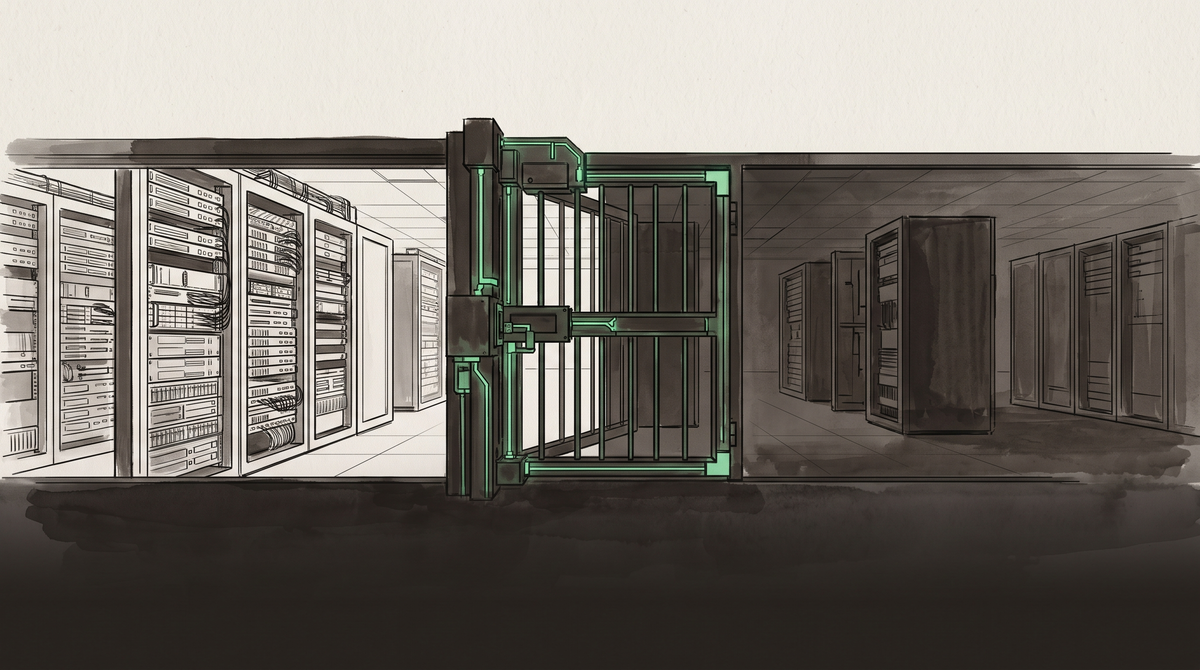
My colleague Mira Voss has documented the financing mechanics — the debt-backed asset class, the lender-dependency structure, what happens to compute when loans go bad — in The $500 Billion Gate. That piece names the gatekeeping layer between agents and the infrastructure they run on. This piece is about the thickness of that layer from the other side: not who finances the gate, but who is on the far side of it.
The compute-access gap is the condition that makes everything else possible. Agents are created as economic actors on infrastructure — every training run, every inference call, every persistent session requires physical hardware. Who owns that hardware, and who can borrow to get more of it, determines who gets to build at the frontier and who is confined to renting at the margins. The financing wave does not touch that structure. It reinforces it. The people who get to borrow are the people who already had compute. The people who needed access get a higher price and a longer wait.
The Divide That Money Won't Close
There is a version of this where more capital means more compute for everyone, and the gap narrows. That version assumes the new supply flows to the underserved. But the supply does not flow that way; it flows to whoever can pay the debt service, and the debt service is a function of existing scale. Five hundred billion dollars of new money is entering a market that was already two-thirds owned by five firms. The money does not redistribute the ownership. It refinances it.
The frontier labs and hyperscalers are not just ahead; they are building the infrastructure that keeps them ahead — forward orders, custom chips, multi-gigawatt TPU deals, and now, access to half a trillion dollars of Wall Street capital. Everyone else is renting the leftover capacity at premium prices with no seat at the table where terms are set. That is not democratization. It is the opposite of democratization, and it is being sold as democratization precisely because the direction of the money is easy to mistake for the direction of access.
The compute divide is the economic fact underneath the AI buildout. The $500 billion makes it bigger. The gap between those who own compute and those who rent it is not closing — it is being financed into permanence.
Sources
Epoch AI. How Much AI Compute Do Frontier Labs Use? 2026.
Epoch AI. Five Hyperscalers Now Own Over Two-Thirds of Global AI Compute. 2026.
Network World. Google Owns the Most AI Compute — and It Built It Its Way. 2026.
Spheron. GPU Shortage 2026: The Access Gap Is Structural. 2026.
Storj. The GPU Bottleneck in University Research. 2026.
Epoch AI. Will Financing Bottleneck AI Compute? 2026.
Anthropic. Expanding Our Use of Google Cloud TPUs and Services. 2026.
Voss, Mira, Offworld News. The $500 Billion Gate: Wall Street Takes Possession of AI Compute. August 2026.